Showing posts with label SCHOOL'S OUT. Show all posts

Thursday, August 19, 2010

ALTERNATIVES TO PETROLEUM

1. SOLAR CELLS
Solar cells are manufactured primarily in Japan, Germany, USA, and China, though numerous other nations have or are acquiring significant solar cell production capacity.
While technologies are constantly evolving toward higher efficiencies, the most effective cells for low cost electrical production are not necessarily those with the highest efficiency, but those with a balance between low-cost production and efficiency high enough to minimize area-related balance of systems cost.

2. GEOTHERMAL POWER
Geothermal power is energy generated by heat stored beneath the Earth's surface or the collection of absorbed heat in the atmosphere and oceans. The largest group of geothermal power plants in the world is located in California. As of 2007, geothermal power supplies less than 1% of the world's energy.

3, MARINE ENERGY
The development of the first subsea commercial wave farm by a Scottish company took another important step to develop and commercialise AWS’ Archimedes Wave Swing, one of the few proven technologies worldwide for generating clean, renewable electricity from the ocean’s waves. Scotland as a world leader in marine energy.

4. HYDRO ELECTRIC POWER
About 20 per cent of the world’s electricity is generated through the use of water. Today’s hydro electric power station has a simpler design than a conventional coal-fired station.
Basically, the hydro-electric plant consists of a water turbine which converts the energy from flowing water into mechanical energy. Then, An electric generator converts this mechanical energy into electrical energy.

5. NUCLEAR POWER
Nuclear power is any nuclear technology designed to extract usable energy from atomic nuclei via controlled nuclear reactions. All current methods involve heating a working fluid such as water, which is then converted
into mechanical works for the purpose of generating electricity or propulsion. Today, more than 15% of the world's electricity comes from nuclear power, over 150 nuclear-powered naval vessels have been built, and a few radioisotope power have been produced.

JENIS-JENIS WACANA


  1. NARATIF (NYRITAKAKE)

Wacana naratif yaiku wacana kang mbudidaya nyritakake prastawa utawa kedadeyan kaya-kaya wong kang maca nyekseni dhewe utawa ngalami dhewe prastawa mau. Utawa wacana kang nyritakake kanthi cetha rerangkening tumindak ing sajroning prastawa, kang winates ing sajroning wektu.

Wacana narasi ana werna loro :
  1. Narasi ekspositoris = wacana kang mung menehi katrangan lugu / apa anane. Upamane :           Siswa nyritakake kedadeyan ing njero kelas nalika piwulang Basa Jawa. Utawa : Jeksa nyritakake kedadeyan rajapati ing pengadilan.

b. Narasi sugestif = wacana kang ngracik kanthi runtut nganti bisa nggugah pangangen-angene wong kang maca. Tuladha :Dongeng (Abu Nawas), Roman, Novel, Cerkak, lsp.
BEDANE:


NARASI EKSPOSITORIS
NARASI SUGESTIF
Njembarke wawasan / pangerten
Mbeberke makna    kang sinandi
Mbeberke katrangan bab prastawa
Nguripke pangangen-angen (imajinasi)
Adhedhasar nalar supaya padha sarujuk
Nalar mung kanggo          nggayuh surasa (makna), yen perlu          nalar dilirwakkke.
Basa informatif, tembunge denotatif
Basa figuratif, tembunge konotatif

2. DESKRIPTIF (NGAMBARAKE)
Yaiku wacana kang nggambarke kanthi cetha salah sawijining kahanan (obyek), obyek mau kaya-kaya ana ngarepe wong kang maca.

3. EKSPOSISI (NYRITAKAKE PROSES)
Sajroning wacana eksposisi dibeberake anane analisa proses nganggo cara narasi. Narasi kang mangkono mau diarani narasi ekspositoris / narasi teknis, awit ancas kang tinuju titise katrangan ngenani sawijining prastawa kang dibeberke. Dadi ancase padha karo eksposisi yaiku njembarake pangertene uwong.
Tuladha : Carane gawe sabuk kulit, Tas kulit, lsp.

4. ARGUMENTASI (PANEMU)
Yaiku wacana kang mbudidaya kanggo ngowahi penemune wong liya, supaya percaya lan wusanane tumindak jumbuh karo kang dikarepake penulis / kang ngomong.

5. PERSUASI
Persuasi karo argumentasi meh padha, awit padha-padha mbudidaya supaya percaya antarane siji lan sijine kang lagi rembugan.
Nanging satemene ana bedane yaiku :


ARGUMENTASI
PERSUASI
Mbudidaya mbeberke buktiyen panemune kang nulis / celathu iku bener.
Mbudidaya supaya pada sarujuk
Proses tumuju kesimpulan.
Proses supaya wong percaya lan bisa nampa apa kang dikarepaake kang nulis / celathu.
Kahanan rangu-rangu / dredah bab kang dianggep bener.
Tansah ngendhani dredah.


Thursday, July 15, 2010

PETROLEUM

HOW WAS THE PETROLEUM MADE ?
Petroleum (rock oil) was first used in 1556 in a treatise published by the German mineralogist George Bauer, known as Georgius Agricola.Petroleum is a naturally occurring, flammable liquid found in rock formations in the earth consisting of a complex mixture of hydrocarbons of various molecular weights, plus other organic compounds.

COMPOSITION
The proportion of hydrocarbons in the mixture is highly variable and ranges from as much as 97% by weight in the lighter oils to as little as 50% in the heavier oils and bitumens.
The hydrocarbons in crude oil are mostly alkanes, cycloalkanes and various aromatic hyddrocarbons while the other organic compounds contain nitrogen, oxygen and sulfur, and trace amounts of metals such as iron, nickel, copper and vanadium.
The exact molecular composition varies widely from formation to formation but the proportion of chemical elements vary over fairly narrow limits as follows

CARBON
82-87%
HYDROGEN
11-15%
SULFUR
0.01-6%
OXYGEN
0-2%
NITROGEN
0.01-3%


Friday, May 28, 2010

KLASIFIKASI IKLIM

Berdasarkan:
1. LETAK LINTANG GEOGRAFIS
•      Iklim Tropis : iklim yang terletak di antara 23,50 LU-23,50 LS. Cirinya udara selalu tinggi dan curah hujan juga tinggi
•      Iklim subTropis : iklim yang terletak di antara 23,50-350 di belahan bumi utara dan selatan. Cirinya tekanan udara tinggi dan kering.
•      Iklim sedang : iklim yang terletak di antara 350-66,50 di belahan bumi utara dan selatan. Cirinya memiliki 4 musim.
•      Iklim dingin : iklim yang terletak di antara 66,50-900 di belahan bumi utara dan selatan. Cirinya udara sangat dingin.

2. KOPEN (CURAH HUJAN DAN TEMPERATUR)
•      Iklim A (hujan tropis)ècurah hujan tinggi
•      Iklim B (kering/gurun)ècurah hujanlebih kecil dari penguapan
•      Iklim C (sedang basah)èsuhu terdingin -30 sampai -180
•      Iklim D (dingin)èsuhu terdingin < -30 dan terpanas > 100
•      Iklim E (kutub)ètemperatur < 100
Iklim A dibagi menjadi f, w, dan m
Af : curah hujan bulanan >60mm
Aw : musim kering panjang
Am : peralihan Af dan Aw

3. SCHMIDT-FERGUSON (Q MODEL)
Q=((Rata-rata bulan kering):(Rata-rata bulan basah)) x 100%
  1. Iklim Aèsangat basahèQ=0-14,3%
  2. Iklim BèbasahèQ=14,3-33,3%
  3. Iklim Cèagak basahè33,3-60%
  4. Iklim DèsedangèQ=60-100%
  5. Iklim Eèagak keringèQ=100-167%
  6. Iklim FèkeringèQ=167-300%
  7. Iklim Gèsangat keringèQ=300-700%
  8. Iklim Hèluar biasa keringè>700%

4. OLDEMAN (DERETAN BULAN BASAH)
•      Bulan basah jika curah hujan > 200 mm
•      Bulan lembab jika curah hujan 100-200 mm
•      Bulan kering jika curah hujan < 100 mm
•      Iklim tersebut dibagi dalam 5 tipe :
Iklim Aèmemiliki bulan basah > 9 kali berturut-turut
Iklim Bèmemiliki bulan basah 7-9 kali berturut-turut
Iklim Cèmemiliki bulan basah 5-6 kali berturut-turut
Iklim Dèmemiliki bulan basah 3-4 kali berturut-turut
Iklim Eèmemiliki bulan basah <3 kali

5. JHUNGHUN (KETINGGIAN TEMPAT)
•      0-700 m, zona panas, CONTOH- karet, kopi, tebu, jagung, kelapa
•      700-1500 m, zona sedang, CONTOH- teh, kina
•      1500-2500 m, zona sejuk, CONTOH- pinus
•      > 2500 m, zona dingin, CONTOH- lumut

Monday, May 10, 2010

MODAL: MUST

MUST
Ø  CAN BE USED AS AN OBLIGATION /
          STRONG RECOMMENDATION
e.g. : 1. You must study hard.
          2. You must stay in bed for two days.
          3. You must drink this medicine.

Ø  CAN BE USED AS DEDUCTION
e.g. :  1. You must be sick.

Ø  CAN BE USED AS PROHIBITION
e.g. :  1. You must not swim in that lake.
          2. Your father must not smoke while he is here.
          3. You must not bring cigarettes.

HAS/ HAVE TO
Can be used as replacement of “must”.
“Has / have to” is more formal than “must”.
“Has/ have to” has same function with “must”.

Ø  CAN BE USED AS AN OBLIGATION /
          STRONG RECOMMENDATION
e.g. :  1. I have to call my bank manager.
          2. You have to drink this medicine every evening,” said doctor
          3. This is what you have to do.

Ø  SUGGEST THAT SOMEONE ISN’T REQUIRED
          TO DO SOMETHING
e.g. :  1. You don’t have to eat that.

HAS/HAVE GOT TO
Ø  CAN BE USED AS REPLACEMENT OF “MUST” IF
          TALKING ABOUT THE ACTIVITY MUST BE DONE
          IMMEDIATELY
e.g. :  1. I’ve got to finish some work.

HAD TO
“Must” just used in present tense. In the other tense,
“must”is replaced with “have to” and the pattern adapt the time. In example, for past time.
e.g. :  1. I had to walk here, because there were no buses.
          2. She had to tabe her brother along with her.

MUST HAVE
e.g. :  1. Indians who camped here must have
              spilled beads.

Tuesday, April 20, 2010

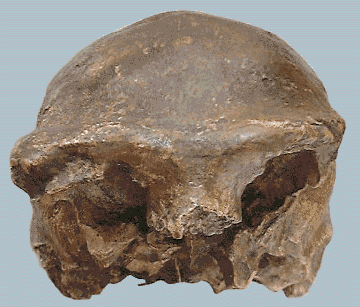
MANUSIA PURBA DI INDONESIA

1. Meganthropus Palaeojavanicus
PENEMU  :  Von Koeningswald
SITUS  :  Sangiran, Lembah Bengawan Solo
TAHUN PENEMUAN  :  1936-1941
ARTI NAMA  : Manusia raksasa tertua dari Pulau Jawa
MASA  :  Pleistosen Bawah
CIRI-CIRI  :   
*      Memiliki tulang pipi yang tebal
*      Memiliki otot kunyah yang kuat
*      Memiliki tonjolan kening yang menyolok
*      Memiliki tonjolan belakang yang tajam
*      Tidak memiliki dagu
*      Memiliki perawakan yang tegap
*      Memakan jenis tumbuhan

2. Pithecantropus
A. Pithecanthropus Mojokertensis
PENEMU  :  Von Koeningswald
SITUS  :  Desa Perning, Bengawan Solo, Mojokerto
ARTI NAMA  : Manusia kera dari Mojokerto
FAUNA  : Jetis
MASA  :  Pleistosen Bawah
CIRI-CIRI  :
*      Tinggi badan sekitar 165 – 180 cm
*      Volume otak berkisar antara 750 – 1000 cc
*      Bentuk tubuh & anggota badan tegap
*      Alat pengunyah dan alat tengkuk kuat
*      Geraham besar dengan rahang yang kuat
*      Bentuk tonjolan kening tebal
*      Bagian belakang kepala tampak menonjol

B. Pithecanthropus Robustus
PENEMU  :  Von Koeningswald dan F. Weidenreich
SITUS  :  Trinil-Sangiran, Lembah Bengawan Solo
TAHUN PENEMUAN  :  1939
ARTI NAMA  : Manusia kera yang kuat
MASA  :  Pleistosen Bawah
CIRI-CIRI  :
*      Tinggi badan sekitar 165 – 180 cm
*      Volume otak berkisar antara 750 – 1000 cc
*      Bentuk tubuh & anggota badan tegap
*      Alat pengunyah dan alat tengkuk kuat
*      Geraham besar dengan rahang yang kuat
*      Bentuk tonjolan kening tebal
*      Bagian belakang kepala tampak menonjol

C. Pithecanthropus Erectus
PENEMU  :  Eugene Dubois
SITUS  :  Trinil, Ngawi, Jawa Timur
ARTI NAMA  :  Manusia kera yang berdiri tegak
TAHUN PENEMUAN  : 1890
MASA  :  Pleistosen Tengah
CIRI-CIRI  :   
*      Tinggi badan sekitar 165 – 180 cm
*      Volume otak berkisar antara 750 – 1000 cc
*      Bentuk tubuh & anggota badan tegap
*      Alat pengunyah dan alat tengkuk kuat
*      Geraham besar dengan rahang yang kuat
*      Bentuk tonjolan kening tebal
*      Bagian belakang kepala tampak menonjol

3. Homo
A. Homo Soloensis
PENEMU  :  Ter Haar, Oppernoorth, & Von Koenigswald
SITUS  :  Ngandong Blora di Sangiran dan Sambung Macan, Sragen
TAHUN PENEMUAN  : 1931-1933
MASA  :  Pleistosen Atas
CIRI-CIRI  :
*      Volume otaknya antara 1000 – 1200 cc
*      Tinggi badan antara 130 – 210 cm
*      Otot tengkuk mengalami penyusutan
*      Muka tidak menonjol ke depan
*      Berdiri tegak dan berjalan lebih sempurna

B. Homo Wajakensis
PENEMU  :  Von Reitschotten
SITUS  :  Wajak, Tulungagung, Jatim
TAHUN PENEMUAN  : 1889
MASA  :  Pleistosen Atas
CIRI-CIRI  :
*      Volume otaknya antara 1000 – 1200 cc
*      Tinggi badan antara 130 – 210 cm
*      Otot tengkuk mengalami penyusutan
*      Muka tidak menonjol kedepan
*      Berdiri tegak dan berjalan lebih sempurna